
Partner Article
New technology boosts recycling rates
An investment in new technology is allowing a Cumbria-based waste company to increase recycling rates on behalf of its customers.
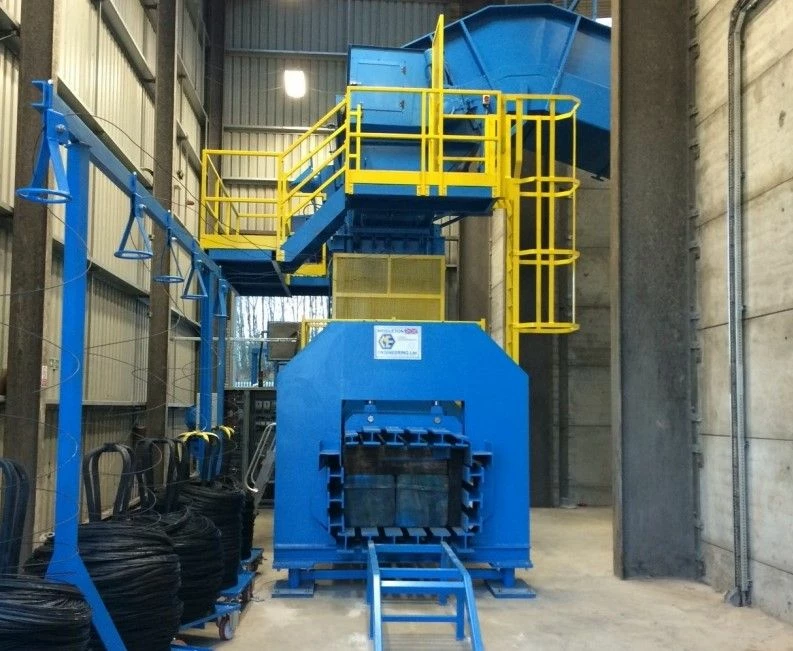
Cumbria Waste Group has spent £300,000 on new waste baling equipment at its materials recycling facility in Distington.
The baler, which compacts waste material to make it easy to store/transport, includes a special cutting mechanism which enables Cumbria Waste Group to deal with extra-large sheets of card in addition to normal waste streams, such as paper.
It is able to process 30 tonnes of waste per hour - as well as improving the quality of the recyclable material. This material is sourced from a range of customers, including Allerdale Borough Council, Copeland Borough Council and Carlisle City Council, as well as from bring banks and household waste recycling centres.
Charles Riddell, Director of Cumbria Waste Group, said: “The new equipment allows us to accept more waste and increase and encourage recycling among our customers across Cumbria.
“It produces highly compacted, clean bales of waste material, such as cardboard and paper, which can then very cost effectively be sold on to re-processors who turn the material back into their original products.
“We have a growing recycling operation at Distington and through investment in new technology and equipment like this, it means we are able to offer our customers the highest standards of service, whilst helping them to meet their environmental objectives.”
This was posted in Bdaily's Members' News section by Neil Shaefer .
Our Partners




 Are you flying too close to business burnout?
 Making education a lot better for a lot more
 Have we made it harder for young people to succeed?
 Celebrating Nissan's North East success story
 Are you a meat proxy?
 Engaging the five-generation workplace
 Talent is an asset, not an operational resource
 Taking advantage of the opportunities ahead
 Accountability isn’t the enemy of empathy
 Act now to avoid a last-minute tax scramble
 How inner-city living can transform a city by the sea
 Artificial intelligence's value is the time it gives back