
Partner Article
‘Green belt’ misnomer is limiting good development
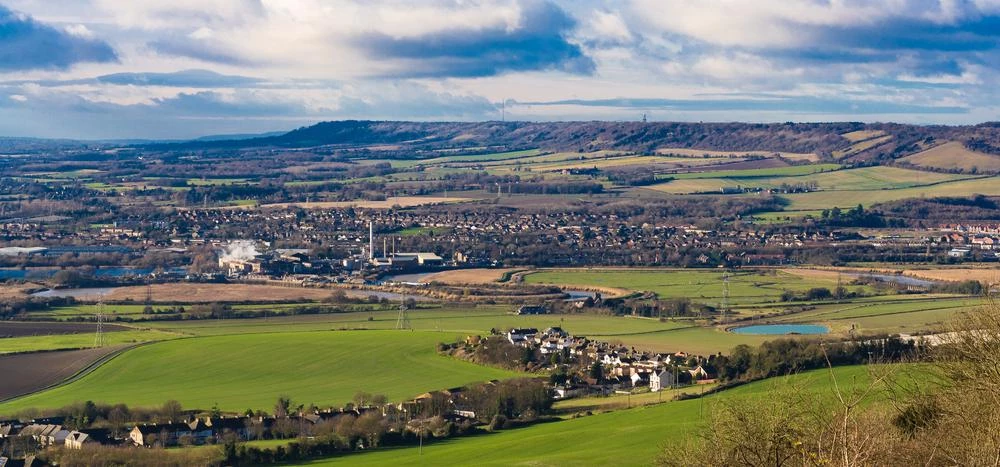
Mention the words ‘green belt land’ and to most people it will conjure images of rolling fields and unspoilt woodlands.
There is a tendency to see all open land as green belt, but the truth is that only about 13 per cent of the land area of England is designated as such.
And contrary to popular belief, it isn’t a legal designation like National Parks or Area of Outstanding Natural Beauty. The green belt is not written into law. It’s actually established through development plans prepared in the context of national planning policy.
So what is it for? Its current purpose in the National Planning Policy Framework (NPPF) is, among other things, to prevent the unrestricted sprawl of urban development.
As a planner I agree wholeheartedly with the principles of green belt, but I fear that outdated green belt designations are undermining some of its original aims, such as encouraging the recycling of derelict urban development land.
I am aware of many vacant parcels of land where dwellings, and even industrial buildings, once stood but where no new development can take place because they are in an area designated green belt. In my opinion, this makes green belt a regressive policy that severely impacts upon local planning authorities’ provision for new development.
Don’t get me wrong. The strongly held view that settlements should be maintained as distinct and separate places has been well served by green belt designation of the intervening land. However, most green belt was established in the 1950s and has not been objectively reviewed since.
To me it goes against the basic values of sustainability that current and future generations are prevented from using the resources at their disposal to meet their needs. I believe that green belt is now leading to poorer planning policy.
Of course, we need to protect our open spaces and we don’t want a development free-for-all. I’m not saying there should be no green belt designation, merely that it should be reviewed.
I fear that the misleading term green belt, and the emotions it evokes, is leading to irrational decisions about where development should and shouldn’t be allowed.
The view, often wrongly perpetuated, that all green belt is off limits, discourages sensible conversations about development and the use of good planning policy to solve problems like our chronic housing shortage.
Paul Walton is a director of PWA Planning a Preston-based planning consultancy
This was posted in Bdaily's Members' News section by PWA Planning .
Our Partners




 Are you flying too close to business burnout?
 Making education a lot better for a lot more
 Have we made it harder for young people to succeed?
 Celebrating Nissan's North East success story
 Are you a meat proxy?
 Engaging the five-generation workplace
 Talent is an asset, not an operational resource
 Taking advantage of the opportunities ahead
 Accountability isn’t the enemy of empathy
 Act now to avoid a last-minute tax scramble
 How inner-city living can transform a city by the sea
 Artificial intelligence's value is the time it gives back