
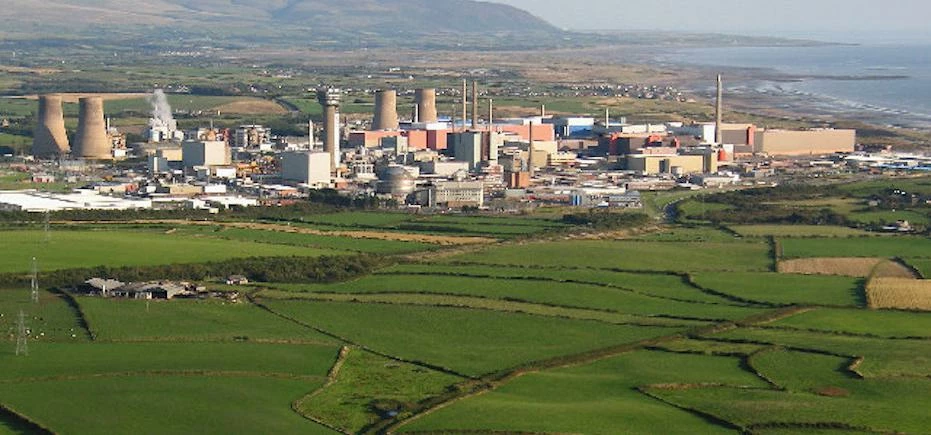
Breakthrough at Sellafield nuclear decommissioning site could save millions
New advances in nuclear waste management could significantly boost progress at the Sellafield reprocessing site in Cumbria, potentially saving hundreds of millions of pounds.
Scientists working at the facility have discovered new information about the long-term behaviour of intermediate level waste (ILW) that will allow the process of packaging and disposing of the material to be simplified.
The four-year study focused on ILW stored in the site’s Magnox Swarf Storage Silo, which the government says is one of the country’s “most hazardous buildings”.
While scientists previously thought it was necessary to undertake a 22-step mechanical treatment and encapsulation process to safely dispose of ILW stored in silos built more than 50 years ago, the new study has suggested that the approach could be cut down to a three-step process, in which the waste is stored ‘raw’ in a shielded container with concrete grout.
Using the new method could slash the decommissioning process by several years and provide multi-million pound savings for taxpayers, according to scientists.
The Nuclear Decommissioning Authority’s (NDA) strategy and technology director, Dr Adrian Simper, said: “This research has delivered the underpinning to what could be a paradigm shift in the management of nuclear waste.
“Having a greater understanding of the long-term behaviour of this material allows us to design a truly fit-for-purpose approach to its management and disposal.”
He added: “To be able to deliver a technical solution to historic ILW at Sellafield, which not only offers a safe and secure route but also opens up the possibility of a quicker and cheaper alternative to current technology, is a genuinely exciting development.”
The study was led by the NDA, the National Nuclear Laboratory and site licence company Sellafield Ltd, and included academics from Leeds, Bristol and London South Bank universities.
Material processed using the new method would be initially stored at Sellafield and then be transported to a UK geological disposal facility for final disposal.
Want your business, product or service to be seen regionally and nationally? Bdaily helps you get your story in front of the right audience, every day. Find out how Bdaily can help →
Join more than 55,000 subscribers by signing up to our daily bulletin each morning here.
Our Partners




 Making education a lot better for a lot more
 Have we made it harder for young people to succeed?
 Celebrating Nissan's North East success story
 Are you a meat proxy?
 Engaging the five-generation workplace
 Talent is an asset, not an operational resource
 Taking advantage of the opportunities ahead
 Accountability isn’t the enemy of empathy
 Act now to avoid a last-minute tax scramble
 How inner-city living can transform a city by the sea
 Artificial intelligence's value is the time it gives back
 Why we must break the magnetic pull of London