
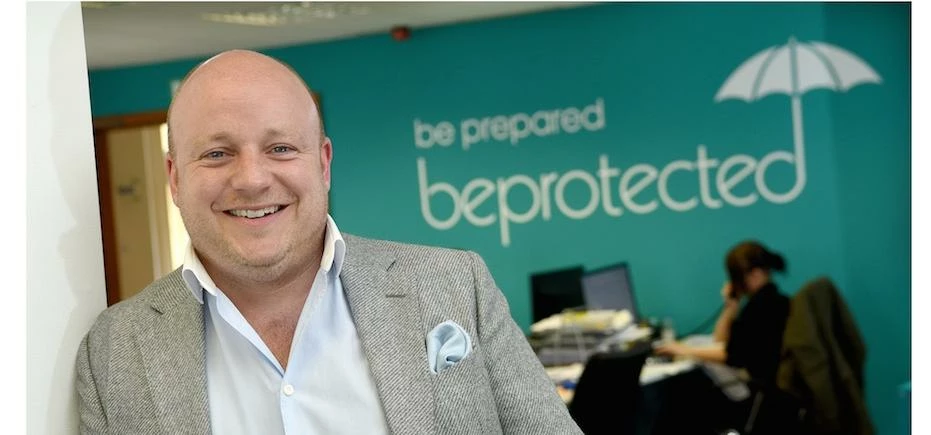
Fintech insurance firm doubles UK head office space in Leeds
Insurance comparison website, Beprotectedinsurance.com, has doubled its office space in Leeds to 5,000 sq ft in Wellington Park House.
The company has taken three floors in the office, located on Thirsk Row, near the train station. The site will operate as the fintech company’s UK head office and customer contact centre.
Adrian Watson, managing director of beprotectedinsurance.com, said: “It is an ideal location for our national headquarters. Leeds is rapidly growing as a global centre for fintech and has a long history of providing great customer service through contact centres, with pioneers like First Direct leading the way.
“The larger office will help us grow and will be refitted to provide a state-of-the-art, creative, working environment.”
The company, which recently announced the creation of 100 new jobs and claims it has already filled half of the roles, is currently recruiting a wide range of digital roles including developers and social media managers.
Experts have named Leeds as one of the leading Fintech centres in the UK, in a sector worth an estimated £20bn annually (UKTI).
Want your business, product or service to be seen regionally and nationally? Bdaily helps you get your story in front of the right audience, every day. Find out how Bdaily can help →
Join more than 55,000 subscribers by signing up to our daily bulletin each morning here.
Enjoy the read? Get Bdaily delivered.
Sign up to receive our popular Yorkshire & The Humber morning email for free.
Our Partners




 Making education a lot better for a lot more
 Have we made it harder for young people to succeed?
 Celebrating Nissan's North East success story
 Are you a meat proxy?
 Engaging the five-generation workplace
 Talent is an asset, not an operational resource
 Taking advantage of the opportunities ahead
 Accountability isn’t the enemy of empathy
 Act now to avoid a last-minute tax scramble
 How inner-city living can transform a city by the sea
 Artificial intelligence's value is the time it gives back
 Why we must break the magnetic pull of London