
Partner Article
Revealed: How Tottenham Hotspur plan to make a £3.5m profit on their new stadium
Premier League football club already look set to rake in millions from their new stadium despite the fact the ground is still over a year away from its grand opening.
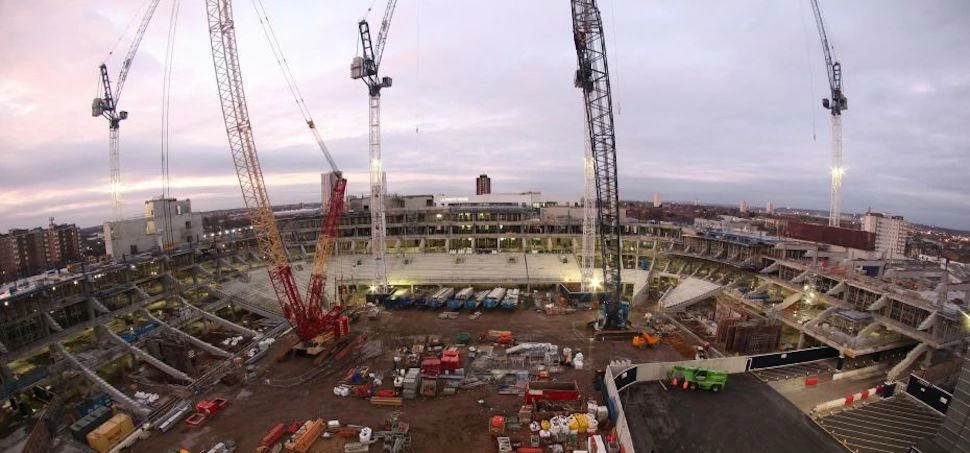
The club, who are currently in the process of building their new £750m stadium in North London, are set to move into their new home in the 2018/19 season, but the notoriously shrewd Chairman Daniel Levy has plans to cash in on cranes currently being used on the construction site.
According to The Sun, the club purchased their own cranes last year after a UK-wide shortage meant none were available for Spurs to hire.
Costing roughly £870k each, the club forked out just over £6m on the seven cranes which are now piecing their 61,000 seater stadium together.
Since then global steel prices have skyrocketed, influenced partly by rising Chinese demand, and now stand at around three times what they did 12 months ago, with even higher rises predicted this year.
As a result, the North London club now stand to make around £500k profit on each crane when it comes to selling them, a small bonus when it comes to recouping the cost of the development as a whole.
Tottenham Hotspur are still on the hunt for a sponsor for their new ground, with the Qatar Investment Authority and Uber previously rumoured to be interested, while a more involved partnership with the NFL has also been mooted as ways in which the club can claw back costs.
Want your business, product or service to be seen regionally and nationally? Bdaily helps you get your story in front of the right audience, every day. Find out how Bdaily can help →
Join more than 55,000 subscribers by signing up to our daily bulletin each morning here.
Enjoy the read? Get Bdaily delivered.
Sign up to receive our popular morning London email for free.
Our Partners




 What does collaboration really mean in business?
 Why NE6 is the real Northern Powerhouse
 Can you really judge someone by their CV?
 Are you flying too close to business burnout?
 Making education a lot better for a lot more
 Have we made it harder for young people to succeed?
 Celebrating Nissan's North East success story
 Are you a meat proxy?
 Engaging the five-generation workplace
 Talent is an asset, not an operational resource
 Taking advantage of the opportunities ahead
 Accountability isn’t the enemy of empathy