
Partner Article
The most overlooked compliance issues for small businesses
Companies must abide by legal standards in a number of core business areas.
One law that affects most businesses is the Health and Safety at Work Act (1974). This places a duty that all employers must make their establishment safe for everyone who enters, including staff, customers and visitors.
Today, the courts hold greater sentencing powers for breaches of health and safety laws and higher courts can even impose unlimited fines. SMEs must ensure they don’t cut corners to avoid fines or reputational damage due to breaches, which in some cases, can bring a company to abrupt end.
Here Direct365, online provider of workplace products and services, has revealed the most common issues often overlooked by small businesses:
Fire equipment
With the implementation of the Regulatory Reform (Fire Safety) Order 2005/2006/2010, non-compliance is no longer an option for businesses in the UK, Scotland and Northern Ireland.
However, as of June 2017, the fire-rescue service attended over 11,600 fires in UK non-residential buildings. Fires are avoidable if the right measures are in place.
Fire alarms, extinguishers and emergency lights all play a pivotal role in avoiding or managing fires.
Portable appliance testing
Faulty electrics are the most common cause of fires.
Electrics can decay over time which leads them to develop serious faults. Possible items include anything from hair dryers, vacuums to the staff kettle.
It is often the things we least expect that can do the most harm. The need to test is especially important for small businesses, for example beauticians must PAT test all their electrical appliances such as hair dryers and styling products, whilst those working out of small industrial units should test the likes of kettles and toasters.
General and commercial waste services
There is often confusion in this area around which laws are relevant. Legislation is often changing, and local enforcement guidance can be confusing.
Businesses are no longer allowed to leave rubbish outside premises and must have waste collected within a set time period.
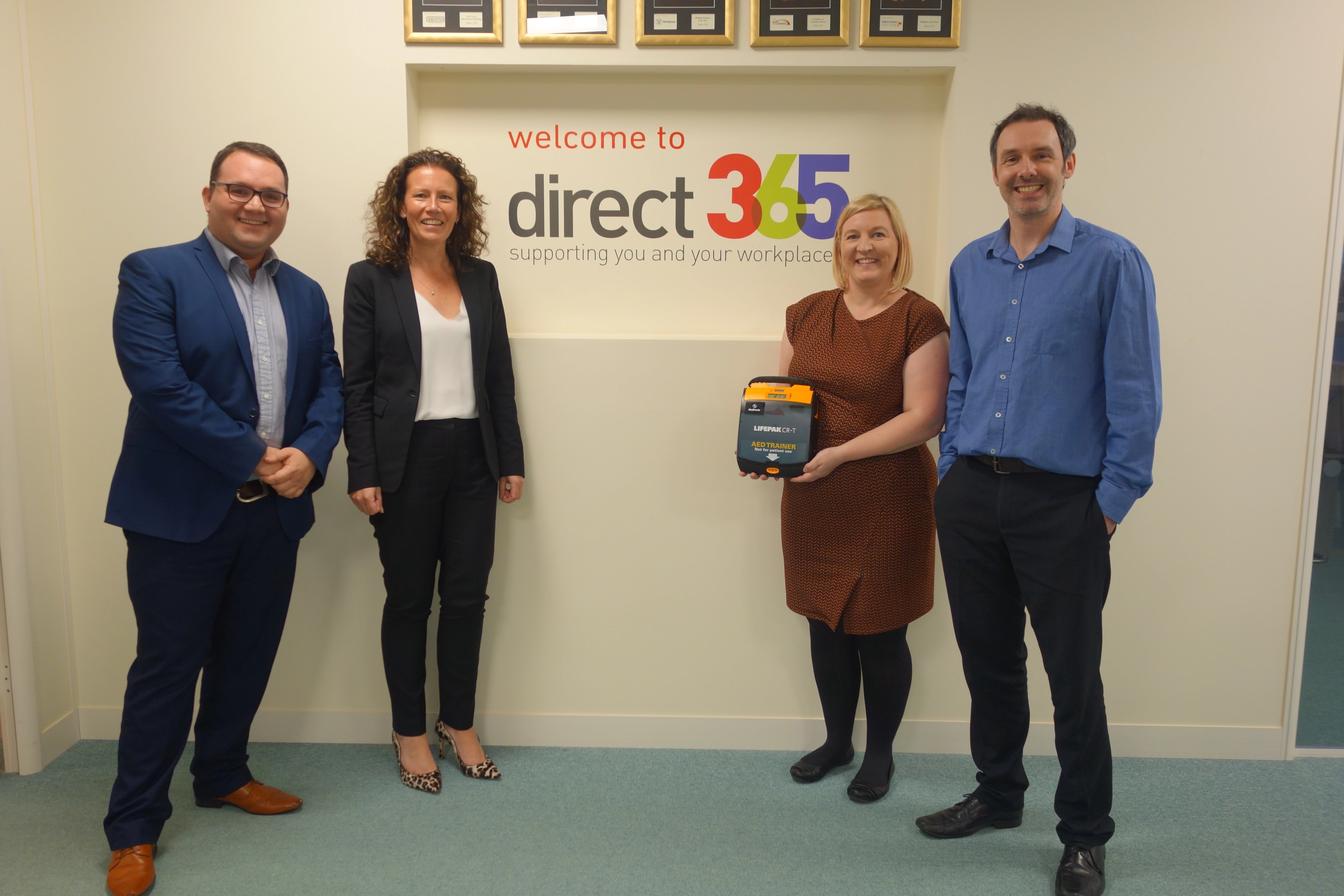
Defibrillators as part of a first aid kit
Unfortunately, having an Automated External Defibrillator (AED) on site isn’t a legal requirement, however over 100,000 people in the UK suffer sudden cardiac death every year.
A recent survey from Direct365 questioned its customers who had purchased automatic external defibrillators (AED) and 10 per cent had been used to save a life.
It also found that 53 per cent had decided to buy an AED following the recommendation of a health and safety professional or after they had received first aid training.
For those companies with an AED unit, it is recommended to inspect the devices every month and replace the consumable parts when needed.
This was posted in Bdaily's Members' News section by Chris Jevons .
Our Partners




 Resilience, connection and maximising opportunity
 In pursuit of healthy obsession
 Why the Budget must restore productivity
 What does collaboration really mean in business?
 Why NE6 is the real Northern Powerhouse
 Can you really judge someone by their CV?
 Are you flying too close to business burnout?
 Making education a lot better for a lot more
 Have we made it harder for young people to succeed?
 Celebrating Nissan's North East success story
 Are you a meat proxy?
 Engaging the five-generation workplace