
Plans submitted for works on "vibrant" South Shields riverside development
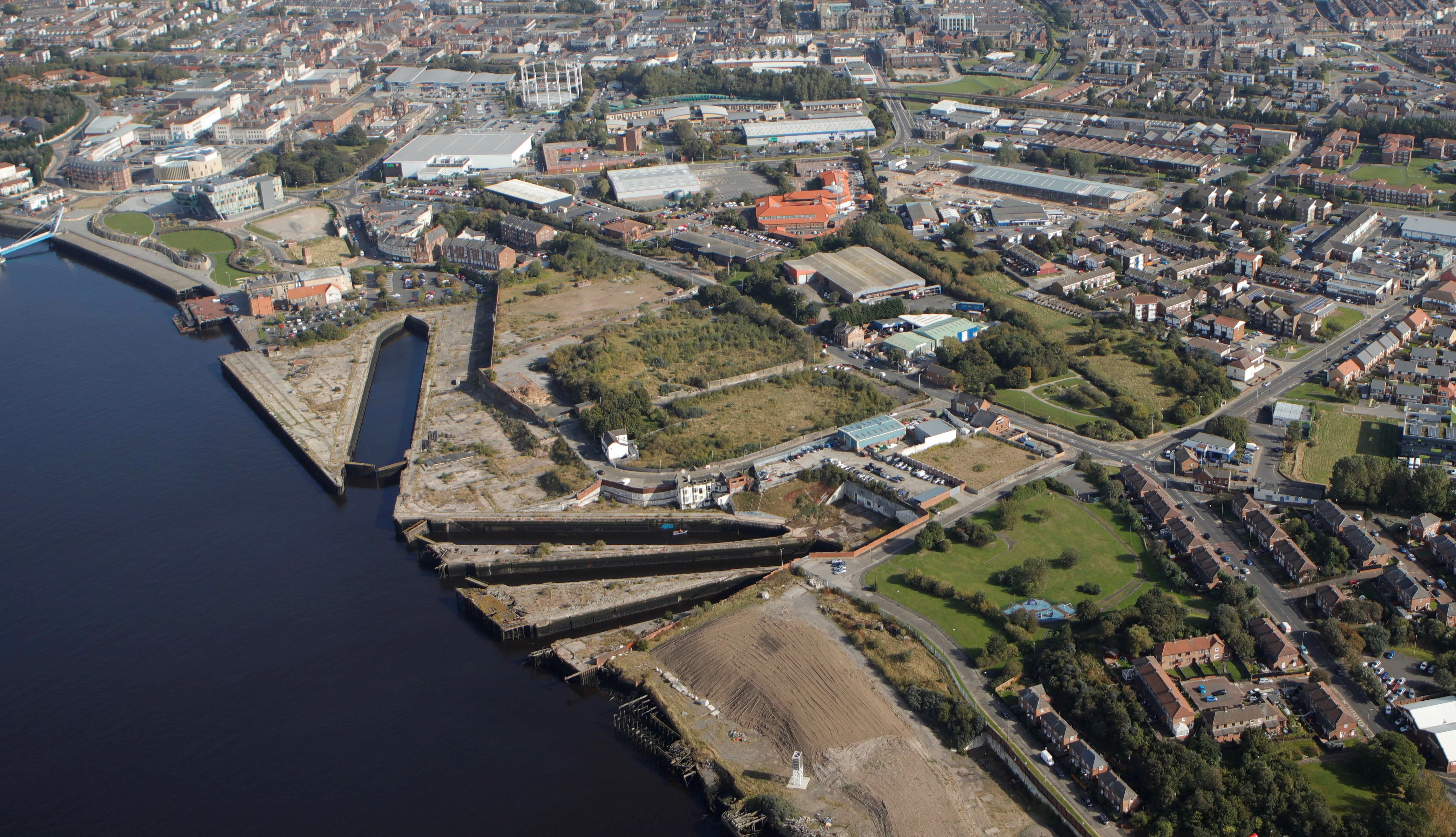
A planning application has been submitted for works to create a “vibrant” riverside development at disused docks in South Shield.
South Tyneside Council has applied for planning permission to carry out civil engineering works to the former industrial site and disused docks at Holborn, South Shields.
The project will see a new quay edge wall installed, regrading of the site, decontamination of the ground and the raising of the former dry docks to overcome flooding issues.
Three of the docks are set to be restored, preserving the area’s industrial heritage.
This work will facilitate plans to transform the brownfield site into a living, working and cultural quarter.
If plans are approved, work is expected to get underway this autumn.
Tracey Dixon, leader of South Tyneside Council, commented: “If approved, these enabling works would prepare what has been a largely derelict area for many years for the transformation into a mixed use development that would deliver new homes and office space and create hundreds of new jobs.”
Want your business, product or service to be seen regionally and nationally? Bdaily helps you get your story in front of the right audience, every day. Find out how Bdaily can help →
Join more than 55,000 subscribers by signing up to our daily bulletin each morning here.
Enjoy the read? Get Bdaily delivered.
Sign up to receive our daily bulletin, sent to your inbox, for free.
Our Partners




 In pursuit of healthy obsession
 Why the Budget must restore productivity
 What does collaboration really mean in business?
 Why NE6 is the real Northern Powerhouse
 Can you really judge someone by their CV?
 Are you flying too close to business burnout?
 Making education a lot better for a lot more
 Have we made it harder for young people to succeed?
 Celebrating Nissan's North East success story
 Are you a meat proxy?
 Engaging the five-generation workplace
 Talent is an asset, not an operational resource