
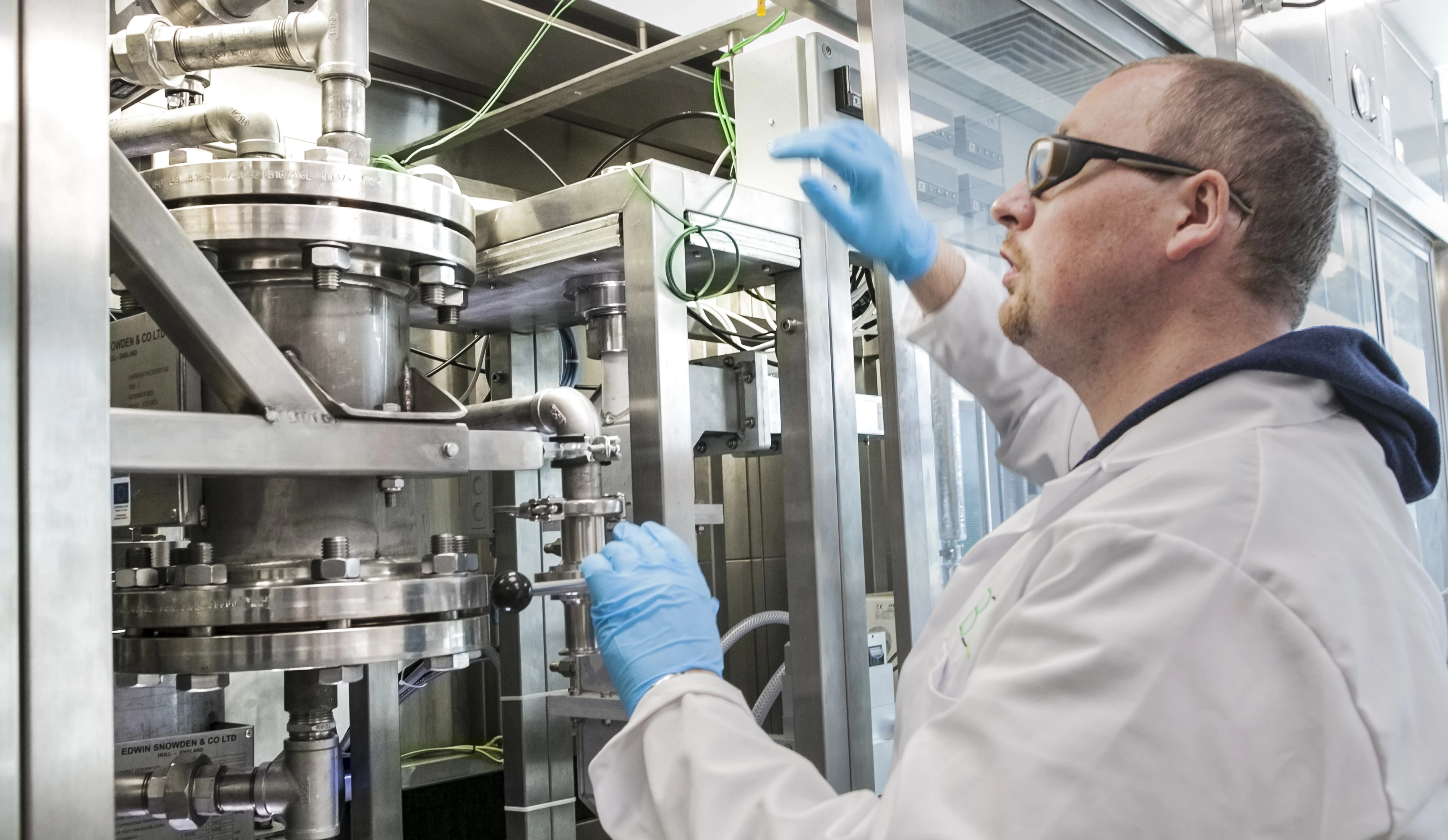
The BDC takes part in two new projects aimed at decarbonising the UK transport sector
The Biorenewables Development Centre (BDC) is part of two new Hydrogen BECCS (Bioenergy with Carbon Capture and Storage) Innovation Programme projects which has been funded by the Net Zero Innovation Portfolio (NZIP) that have been awarded by the Department for Business, Energy and Industrial Strategy (BEIS).
The BDC, a subsidiary of the University of York is an open-access research, development and demonstration centre working at the interface between academia and industry to develop, scale-up and commercialise bio-based products and processes.
Joe Ross, director at the BDC said; “We are delighted to be part of these phase one projects and work with academic and industry partners to explore how low carbon hydrogen technologies can offer potential solutions for decarbonising the UK transport sector and contribute towards the UK’s net-zero goals.”
The first project; Utilisation of Biorefinery Residues for Blue Hydrogen Production will look at the growing use of biofuels produced through fermentation and digesters. The project will produce hydrogen through gasification of digester sludges and focus on cost effective treatment of bio-refinery waste for use as a gasifier feedstock, which will also have process efficiency benefits.
The project is led by the University of Hull, other partners include the BDC, Aston University, Jesmond Engineering and Teesside University.
The second project, H2-Boost aims to produce biohydrogen for the UK transport sector in an environmentally sustainable and commercially viable manner. The partners will conduct a comprehensive feasibility study to assess the potential of this technology and produce a business case for implementation at full scale.
The project is led by the University of Leeds, other partners include the BDC, Greenthread Solutions, NNFCC and Aardvark EM.
After these six month projects are completed, the partners will have the opportunity to apply for further phase two funding. The Hydrogen BECCS Innovation Programme supports technologies which can produce hydrogen from biogenic feedstocks and be combined with carbon capture.
It forms part of the BEIS £1 bn Net Zero Innovation Portfolio, which aims to accelerate the commercialisation of innovative clean energy technologies and processes through the 2020s and 2030s.
By Mark Adair – Correspondent, Bdaily
- Add me on LinkedIn and Twitter to keep up to date
- And follow Bdaily on Facebook, Twitter and LinkedIn
- Submit press releases to editor@bdaily.co.uk for consideration
Want your business, product or service to be seen regionally and nationally? Bdaily helps you get your story in front of the right audience, every day. Find out how Bdaily can help →
Join more than 55,000 subscribers by signing up to our daily bulletin each morning here.
Enjoy the read? Get Bdaily delivered.
Sign up to receive our daily bulletin, sent to your inbox, for free.
Our Partners




 Resilience, connection and maximising opportunity
 In pursuit of healthy obsession
 Why the Budget must restore productivity
 What does collaboration really mean in business?
 Why NE6 is the real Northern Powerhouse
 Can you really judge someone by their CV?
 Are you flying too close to business burnout?
 Making education a lot better for a lot more
 Have we made it harder for young people to succeed?
 Celebrating Nissan's North East success story
 Are you a meat proxy?
 Engaging the five-generation workplace